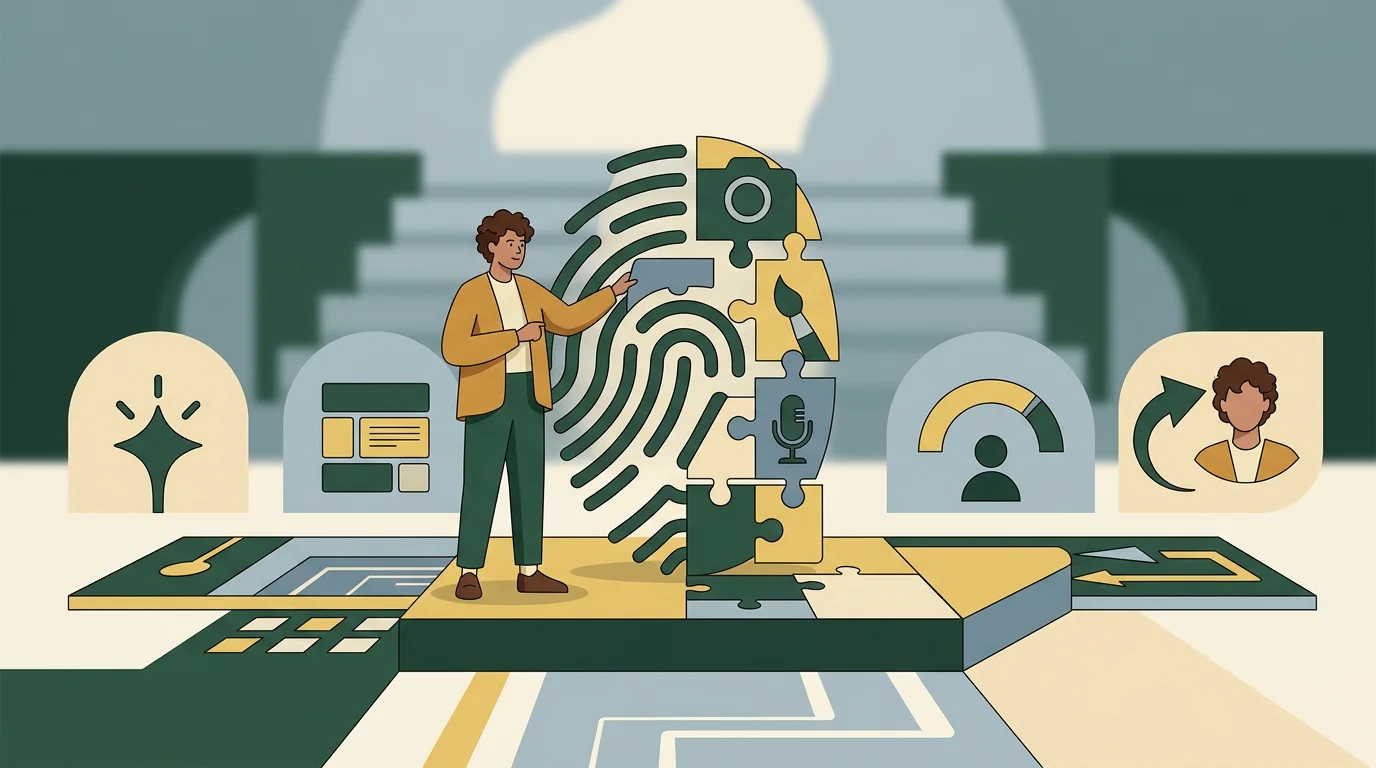
The Problem: Your Identity Is a Moving Target
In 2026, every creator’s digital identity is fragmented across platforms, usernames, and inconsistent visuals. Your audience doesn’t know where to find you, and your content gets lost in algorithmic noise. This isn’t just an aesthetic issue-it’s a systems issue. Without a centralized identity, you’re constantly rebuilding trust, traffic, and monetization from scratch.
The cost isn’t just time; it’s compounding. Every time you migrate platforms, rebrand, or lose access to an account, you reset your audience’s trust. The solution isn’t more platforms-it’s a single source of truth that anchors your entire digital presence.
The 4-Step Legibility System
This isn’t about aesthetics-it’s about systems. A legible digital identity is one where your audience can:
Recognize you instantly across contexts
Trust your consistency
Find all your work in one place
Follow this framework to build it.
Step 1: Anchor with a Custom Domain (The One Thing You Own)
Your domain is the only digital asset you fully control. Everything else-social accounts, newsletters, even your website-can be suspended, shadowbanned, or rebranded. Your domain cannot.
Checklist: Domain Setup
Buy a short, brandable domain (e.g.,
yourname.comoryourproject.net). Avoid hyphens, numbers, or trends (.xyz,.io).Set up automatic redirects from common misspellings (e.g.,
yourname.dev→yourname.com).Configure DNS records for email (e.g.,
hello@yourname.com) and subdomains for different projects (e.g.,writing.yourname.com).
Pro move: Use a domain registrar with two-factor authentication (2FA) and auto-renewal to prevent accidental loss.
Step 2: Design Your Visual Identity as a System
Your visual identity isn’t a logo-it’s a set of rules that make you recognizable in any context.
Framework: The 3-Part Identity System
Component | Rule | Example
Color Palette | Limit to 3 primary colors + 1 accent. Use hex codes everywhere. | Primary: #003366, Accent: #FF6B6B
Typography | Choose 2 fonts: 1 for headings, 1 for body. Embed or use system-safe. | Headings: Inter, Body: System
Imagery Style | Define a filter or composition rule for all visuals. | High-contrast, centered crops
Action: Create a one-page style guide (Google Doc or Notion) and store it in your brand folder. Update it as you scale.
Step 3: Standardize Your Naming Convention
Inconsistent usernames across platforms dilute your identity. Your audience shouldn’t have to guess where to find you.
The Naming Convention Blueprint
Primary handle: Use your domain name or a close variation (e.g.,
@yournameon X, Threads, Bluesky).Secondary handles: For projects, use
project.yourname.comor@project_yourname.Vanity URLs: Point all social bios to your domain with a link-in-bio tool (e.g., Carrd, Linktree, or a custom page on your site).
Rule: If a platform doesn’t allow your primary handle, don’t use it. Build elsewhere.
Step 4: Build Your Central Hub (The Hub-and-Spoke Model)
Your domain isn’t just a landing page-it’s the hub of a spoke-and-hub system that distributes your work while keeping control.
The Hub-and-Spoke Blueprint
Spoke Type | Purpose | Tool/Platform
Newsletter | Deep engagement, direct monetization | Beehiiv, Substack, ConvertKit
Long-form blog | SEO, evergreen content | Ghost, WordPress, or a static site (Eleventy, Hugo)
Portfolio | Work samples, case studies | Webflow, Framer, or a simple Notion page
Community | High-signal discussions | Discord, Circle, or a forum on your domain
Key: Each spoke drives traffic back to your domain via embedded CTAs, cross-links, or email signatures.
The Operators’ Checklist: What to Do This Week
Buy your domain (if you don’t have one). Use Namecheap, Cloudflare, or Porkbun.
Set up 301 redirects for common misspellings.
Create a style guide (Notion or Google Docs).
Update your bio on 3 platforms to link to your domain.
Publish one piece of content on your domain (a blog post, portfolio item, or newsletter welcome page).
Why This Works in 2026 (And Beyond)
Algorithms are volatile. A social platform can change overnight. Your domain is permanent.
Attention is scarce. A legible identity cuts through noise by being instantly recognizable.
Monetization is direct. Brands and collaborators prefer working with creators who control their own channels.
This isn’t about vanity-it’s about survival. The creators who thrive in 2026 aren’t the loudest; they’re the most legible.
Next Steps
Your digital identity isn’t built in a day. Start with the domain and style guide this week. Then, layer in your hub-and-spoke system. The goal isn’t perfection-it’s progress. Each step compounds.
Your move: Open your domain registrar and set up the first redirect. That’s your first system. Build from there.