The Wild Heart of East Algarve: A Guide to Natural Parks and Reserves
Beyond the golden sands and whitewashed villages of the East Algarve lies a world of pristine biodiversity. For those seeking a deeper connection with the landscape, the region offers two of Portugal’s most vital protected areas: the Ria Formosa Natural Park and the Reserva Natural do Sapal de Castro Marim e Vila Real de Santo António. These sanctuaries provide a masterclass in conservation, offering tranquil trails and world-class birdwatching.
Ria Formosa Natural Park: A Coastal Masterpiece
Stretching 60 kilometers from Faro to the edge of Cacela Velha, the Ria Formosa Natural Park is a labyrinth of lagoons, saltpans, and barrier islands. This ever-shifting ecosystem is protected from the Atlantic by a string of dunes, creating nutrient-rich waters that support a vast array of marine life and migratory birds.
Quinta de Marim: The Gateway to the Park
For an immersive introduction to the region’s ecology, visit the Centro de Educação Ambiental de Marim (CEAM), located within the Quinta de Marim reserve near Olhão. As the park’s headquarters, this 60-hectare estate features walking trails that wind past restored tidal mills and bird blinds.
Visitor Information:
- Hours: Daily, 08:30 – 19:00.
- Entry: Approximately €3.20 per person.
- Contact: Tel: +351 289 700 210.
- Access: Located just off the EN 125. From Olhão, follow signs for "Parque Natural" toward the coast. The visitor center is typically closed on major public holidays (January 1, May 1, and December 24–25).
Exploring the Archipelago
The park is best experienced through its diverse access points, each offering a distinct character:
- Faro: The western gateway, ideal for boat excursions to the more remote islands.
- Olhão: The park’s "capital," famous for its brick-red market and frequent ferry departures.
- Fuseta: A traditional fishing village providing easy access to the tranquil lagoon beaches.
- Tavira: The cultural heart of the East Algarve, offering scenic boat rides to Ilha de Tavira.
- Cacela Velha: A historic clifftop hamlet marking the park’s eastern boundary, offering the region's most iconic panoramic views.
Sapal de Castro Marim: A Wetland Wonderland
Further east, where the Guadiana River meets the sea, lies the Reserva Natural do Sapal de Castro Marim e Vila Real de Santo António. This 2,000-hectare expanse of salt marshes and wetlands is a vital stopover for birds migrating between Africa and Europe.
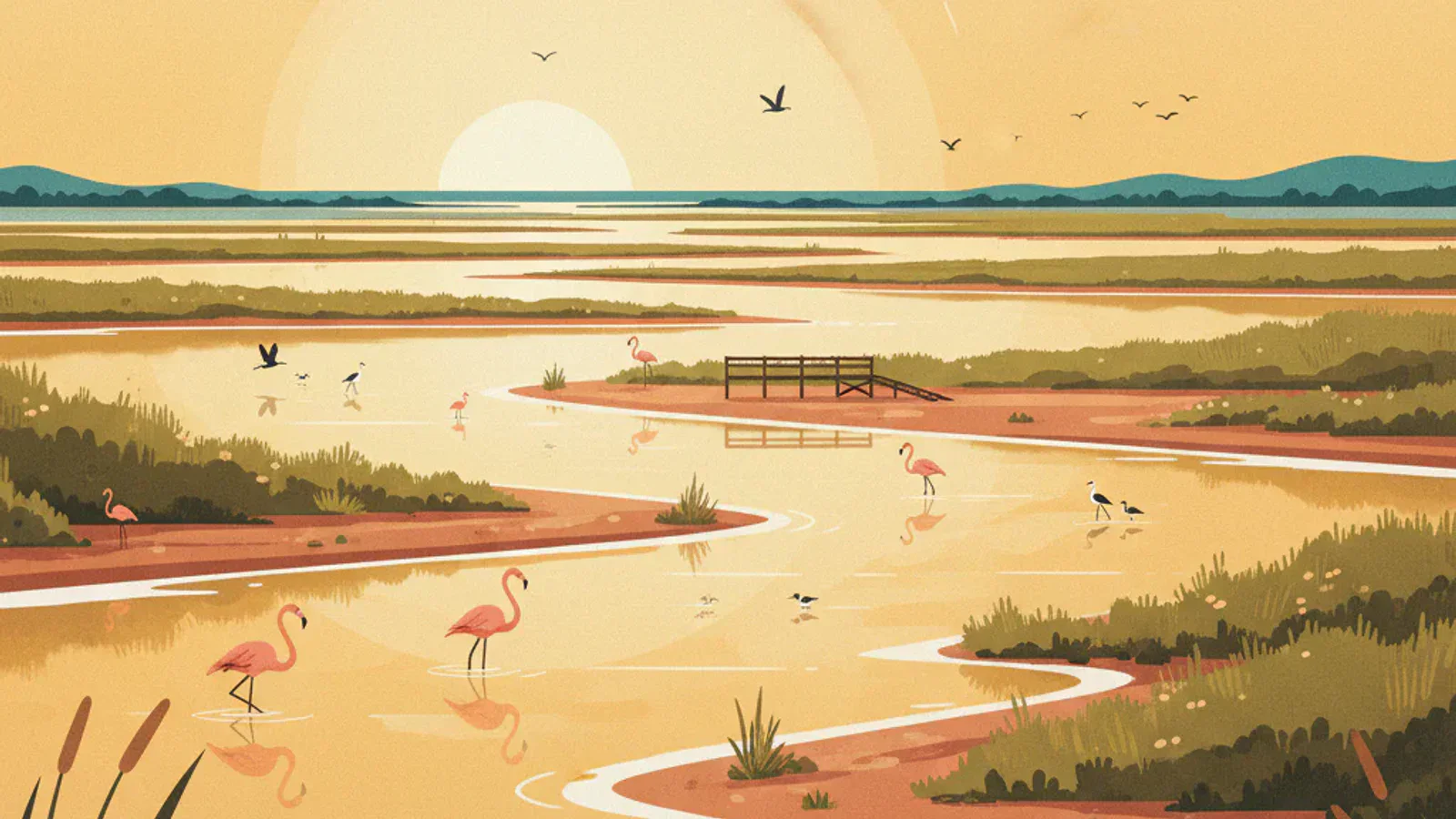
The landscape is defined by ancient saltpans, where "white gold" is still harvested using traditional methods. Visitors can observe the elegant silhouettes of flamingos, avocets, and storks against the shimmering reflection of the marshes.
Planning Your Visit
The reserve is best explored via its network of level walking and cycling trails. While the landscape is always accessible, the visitor center hours can vary. We recommend calling ahead (Tel: +351 281 510 680) to confirm the latest schedules for guided insights or educational exhibits.
A Birdwatcher’s Paradise
Both Ria Formosa and Sapal are designated Important Bird Areas (IBAs). Whether you are a dedicated ornithologist or a casual nature lover, the sight of over 150 species—including the rare Purple Swamphen or the majestic Greater Flamingo—is a highlight of any East Algarve itinerary.
To make the most of your visit in 2026, we recommend bringing high-quality binoculars and visiting during the early morning or late afternoon when the light is soft and the wildlife is most active. These parks are not merely destinations; they are the quiet, wild heart of Portugal, preserved for those who know where to look.
Birdwatching quality changes by season, tide and wind, so conditions matter as much as location. Early morning and late afternoon are usually the most productive windows, especially around lagoons and salt marshes. Carry water, sun protection and closed shoes for salt-pan trails, and check local access updates after heavy rain or strong wind events.